

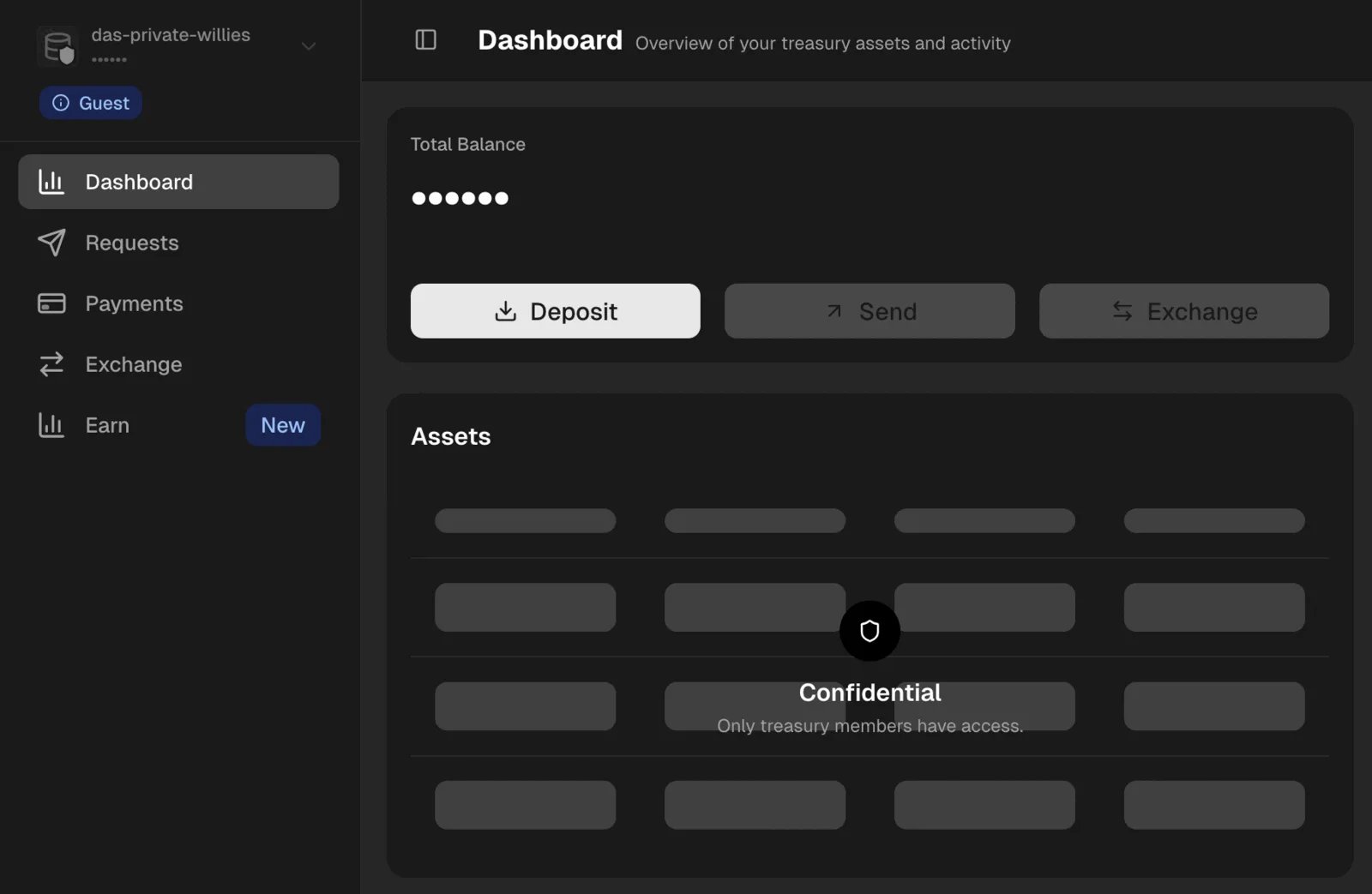
How do confidential treasuries work?
Confidential treasuries are built on top of the same core technology as public treasuries, meaning they are multisig wallet smart contracts deployed on NEAR Protocol.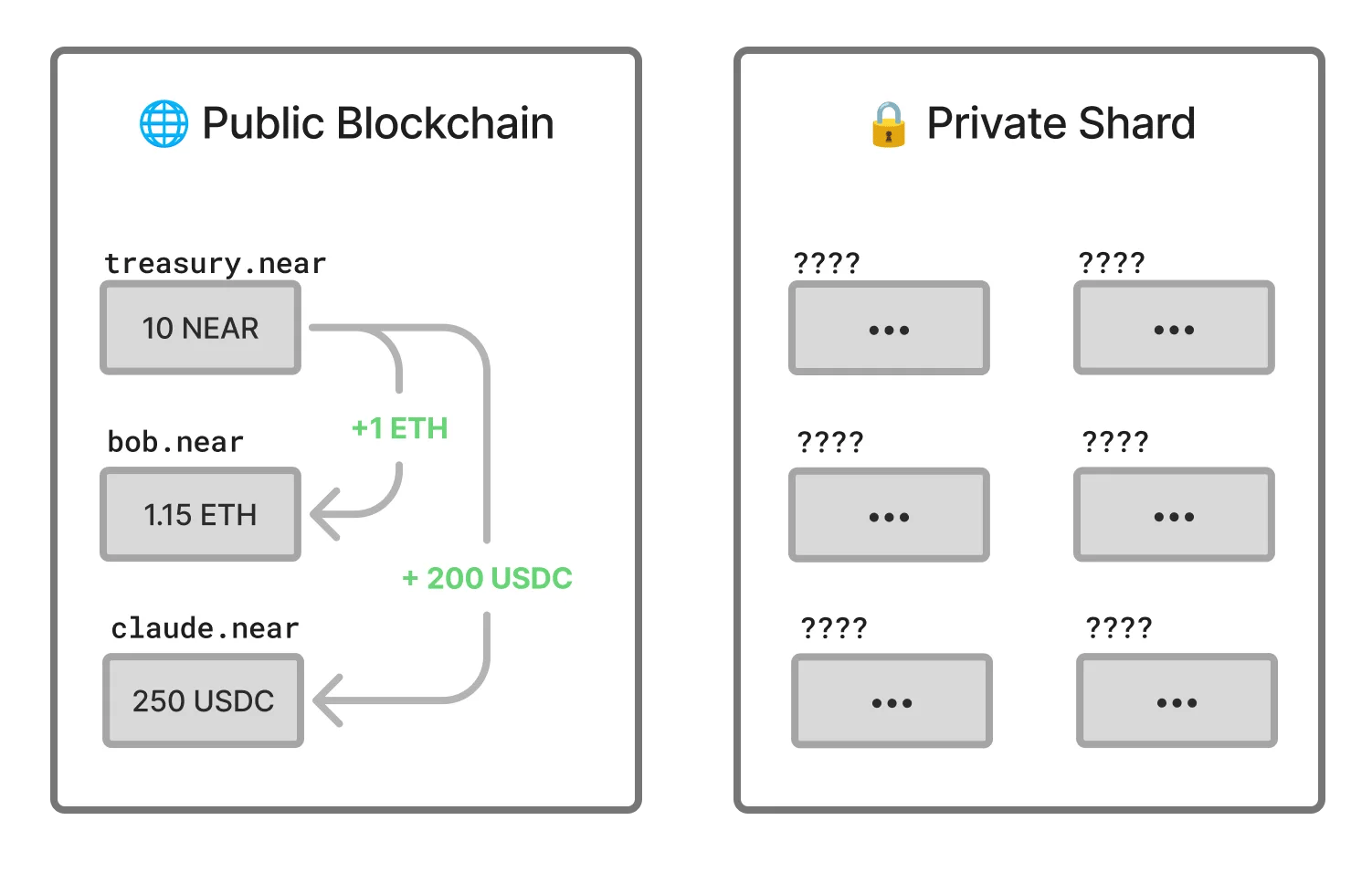
What is a private shard?
What is a private shard?
While NEAR Protocol is a single blockchain, it is actually composed of multiple small chain instances called shards, which run in parallel. Each shard is in charge of certain accounts and smart contracts and operates in parallel, with all shards aggregating to form the NEAR blockchain.In NEAR, all shards are public by default, which means that anyone can see all the funds and transactions happening on them. However, NEAR also allows the creation of private shards, which run on the same technology as the public ones, but with the main difference of not exposing any data to the public. This makes private shards an ideal solution for confidential treasuries, as they provide all the security and functionality of a public shard, but with the added privacy of not exposing any financial data to the public.
Public vs Confidential overview
Confidential treasuries share all the core features of public treasuries, such as multi-member management and a secure proposal and voting system. The key difference is in how funds are handled.Deposits
Because confidential treasuries run on a private shard, funding them and paying from them requires moving funds between the private shard and public blockchains. Trezu supports two ways to do that, depending on how your team wants to operate. Automatic bridging through temporary deposit addresses Your treasury can receive public funds on a temporary account and automatically bridge them to the private. This allows you to fund your treasury from any external wallet just as you would with a public treasury. Furthermore, using a unique deposit address for each transfer makes it harder for external observers to link multiple deposits, wallets, or counterparties to the same treasury, which provides additional privacy.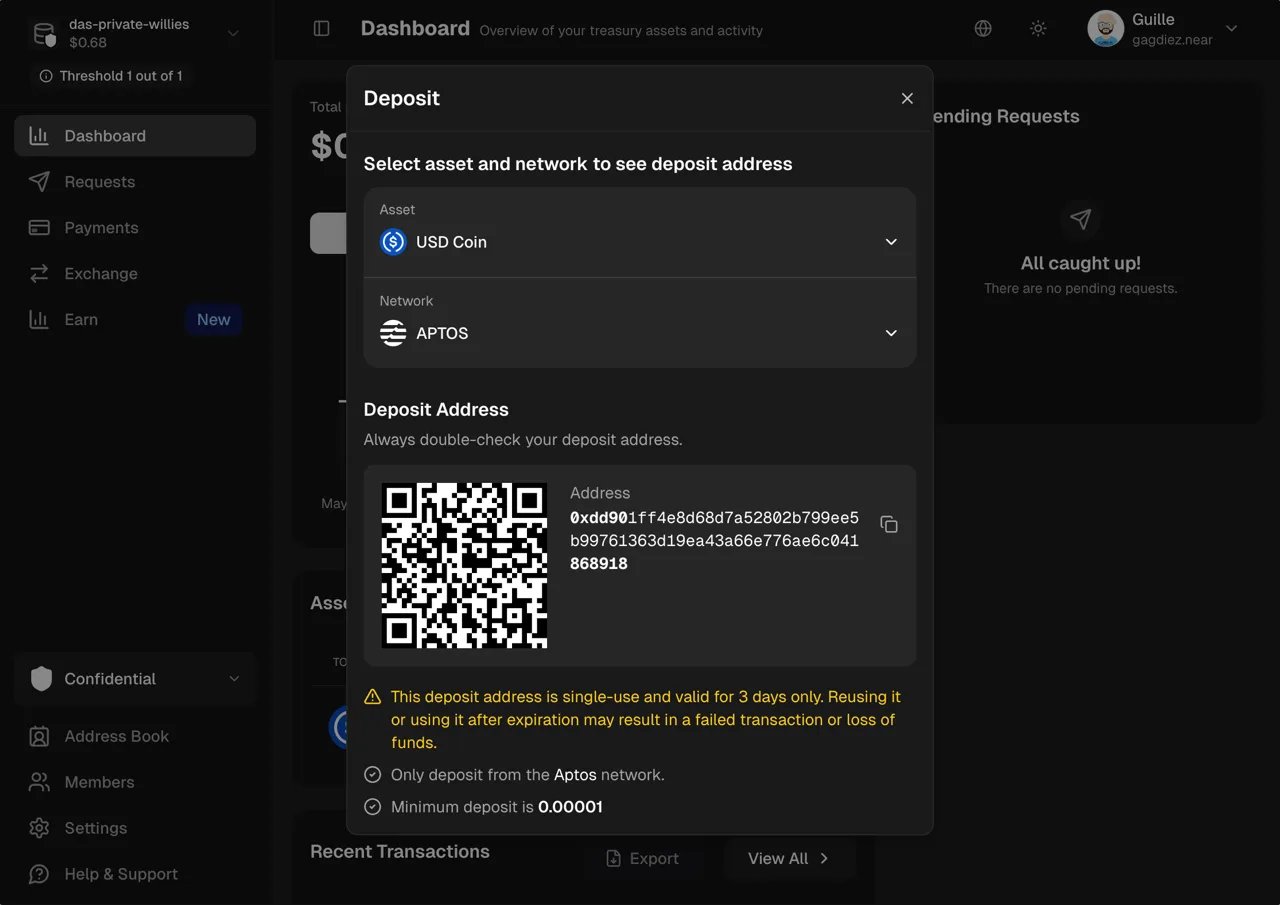
Proposals
In a public treasury, anyone can see both the existence and the contents of proposals. In a confidential treasury, anyone can see that a proposal exists and how members voted, but only team members can see the proposal details. For example, if a team member creates a proposal to pay10 USDC to alice.near, the public can see that a proposal was created and whether it was approved or rejected, but only team members can see that it was a payment proposal, as well as the amount, token, and recipient.
Payments
Confidential treasuries can create payments in all supported assets, and the recipient can be either a confidential near.com accounts or a public wallet addresses. Payments to near.com confidential accounts will be executed within the private shard, so the recipient will need to log in to near.com to access and withdraw the funds. When making payments to public wallets, Trezu will automatically bridge the funds from the private shard to the recipient’s address on the selected chain. In this case, the public recipient will see the funds arriving from the near.com settlement account, as that is the account used to bridge funds from the private shard to the public one.Frequently Asked Questions
Can I create a treasury that is both public and confidential?
Can I create a treasury that is both public and confidential?
No, when creating a treasury you need to choose whether you want it to be public or confidential, as this will determine how the treasury is deployed and how it handles funds.If you want some of your funds and transactions to be public and others to be private, we recommend creating two separate treasuries, one public and one confidential, and managing your funds accordingly.
A Private Shard on NEAR?
A Private Shard on NEAR?
While NEAR Protocol is a single blockchain, it is actually composed of multiple small chain instances called shards, which run in parallel. Each shard is in charge of certain accounts and smart contracts and operates in parallel, with all shards aggregating to form the NEAR blockchain.Almost all shards on NEAR are public, which means that anyone can see all the funds and transactions happening on them. However, NEAR also allows the creation of private shards, which run on the same technology as the public ones, but with the added security of being private and encrypted.This is how confidential treasuries work: they are deployed on their own private shard, which is not accessible to anyone outside the team, thus keeping all financial data private.
How do I fund a confidential treasury?
How do I fund a confidential treasury?
To deposit funds into a confidential treasury, you can either use near.com and fund the treasury’s account through a confidential account there, or let Trezu handle the bridging process for you automatically through a temporary deposit address.
Are payments from a confidential treasury private?
Are payments from a confidential treasury private?
Yes, all payments from a confidential treasury are private, as they are executed within the private shard. This means that the details of the payment, such as the amount, recipient, and token, are only visible to team members and not to the public.Recipients of confidential payments can either receive the funds in a near.com confidential account or receive them directly in their public wallet.For recipients who receive payments directly in their public wallet, the sender will appear as the general NEAR Intents account.
Are swaps from a confidential treasury private?
Are swaps from a confidential treasury private?
Yes, all swaps from a confidential treasury are private, as they are executed within the private shard. This means that the details of the swap, such as the amount, tokens involved, and exchange rate, are only visible to team members and not to the public.
Can I still connect with my Ledger?
Can I still connect with my Ledger?
Yes, you can still connect with your Ledger wallet to manage a confidential treasury. The process of connecting your wallet and signing transactions is the same as with a public treasury, as both types of treasuries are built on the same core technology.The main difference is that with a confidential treasury, all transactions and actions are executed within the private shard, so while you can use your Ledger to sign transactions, the details of those transactions will not be visible to the public.